Class is outside today.
Bring your kids to the pumpkin patch on a quiet Tuesday and teach a full day of science, math, and writing without planning a thing. Seven self-guided field lessons, one free workbook, no reservation needed.
Get the free workbookSee the lessons
Same page, three levels
The hardest part of a homeschool field trip is that your kids are not the same age. Every page in the workbook is banded into three levels, so a kindergartner and a sixth grader work side by side on the same pumpkin without you running three lessons at once.
Sprouts
Draw it, count it, touch it, talk about it. A grown-up reads the instructions aloud. Circle-the-answer pages and lots of drawing boxes.
Growers
Measure, record, compare, and write a few sentences. Data tables, a map with a key, money problems using the farm's real prices.
Harvesters
Collect data, explain reasoning, research, and think like a farmer. Price-per-pound, percent loss, adaptations, and a real staff interview.
What a visit actually looks like
- Print the workbook at home and pick two or three lessons.
- Come any day we're open. No reservation, no set start time.
- Pay admission at the gift shop counter and go.
- Each lesson happens at one spot on the farm and takes 15 to 30 minutes.
- Play in between. That's the point of doing school at a pumpkin patch.
- Finish the rest on a second visit, or take them home.
What to bring
- The printed workbook and a clipboard or hard book to lean on
- Pencils and crayons
- A tape measure or a piece of string
- A bag for leaves, seeds, and treasures
- $5 to $10 per kid for the pumpkin and apple the math lessons use
- Boots. It's a farm.

Every stop on the farm is a lesson
Listed in the order that walks the property most efficiently, but you can do them in any order. Each one has a parent page with a script, discussion questions, and answers, plus the kid pages.
Animal Scientist
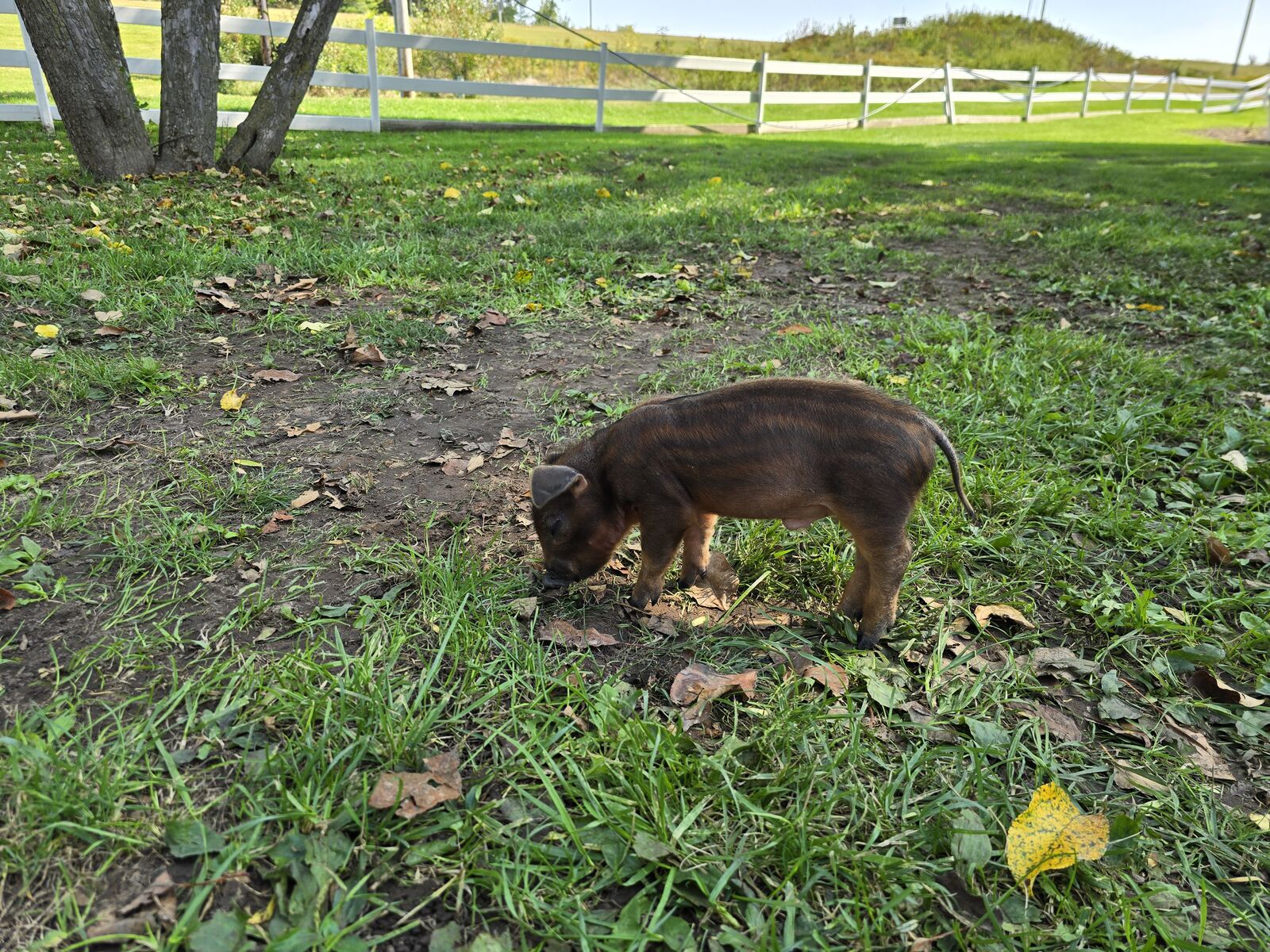
Observe three animals and record what you actually see, not what you already know. Meet Milton and Stevie the goats, Lucky the pig, and Lottie and Dottie, our baby Highland cows. Why does a cow from Scotland have that much hair, and what would that mean in July?
Pumpkin Math
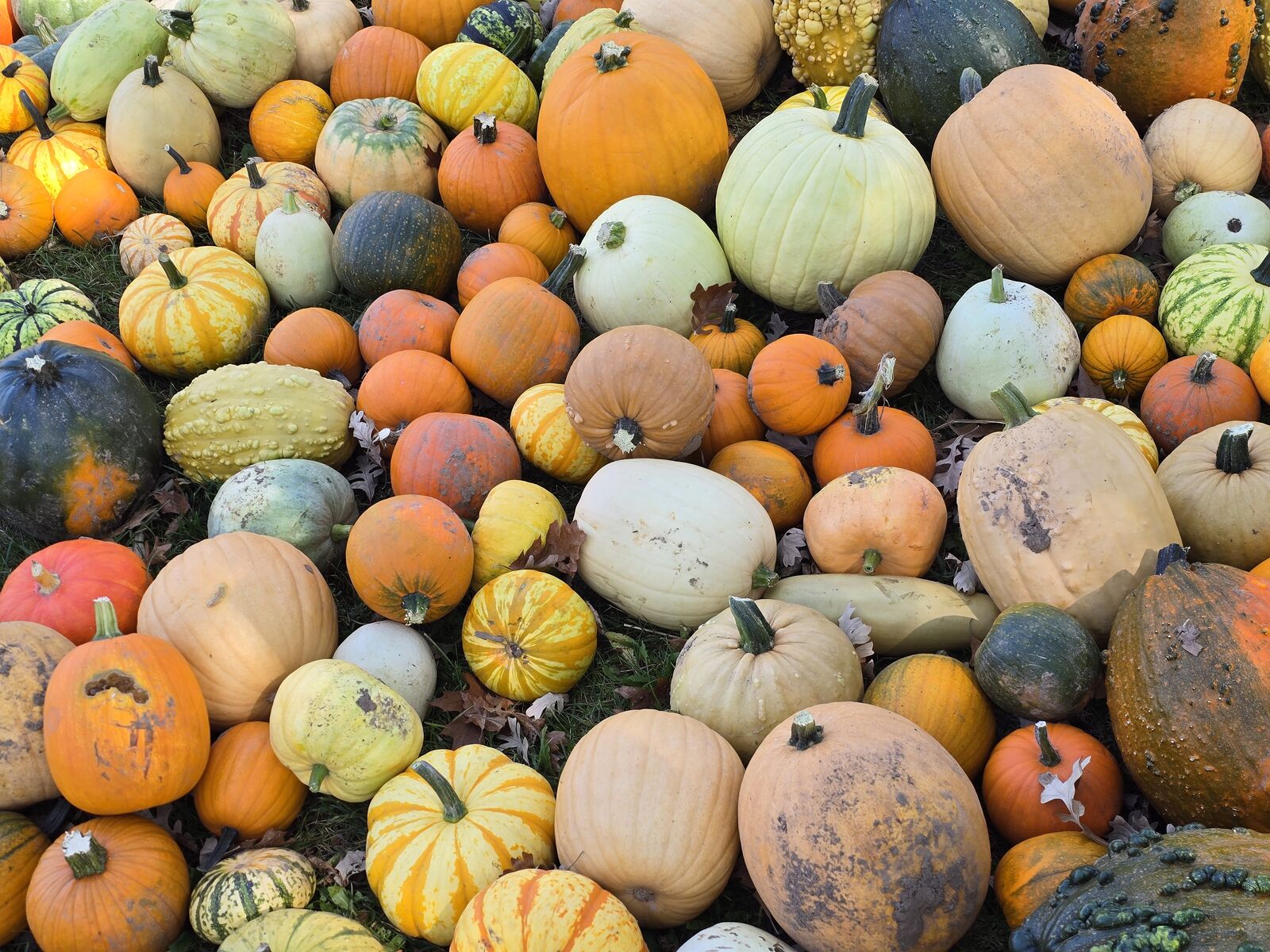
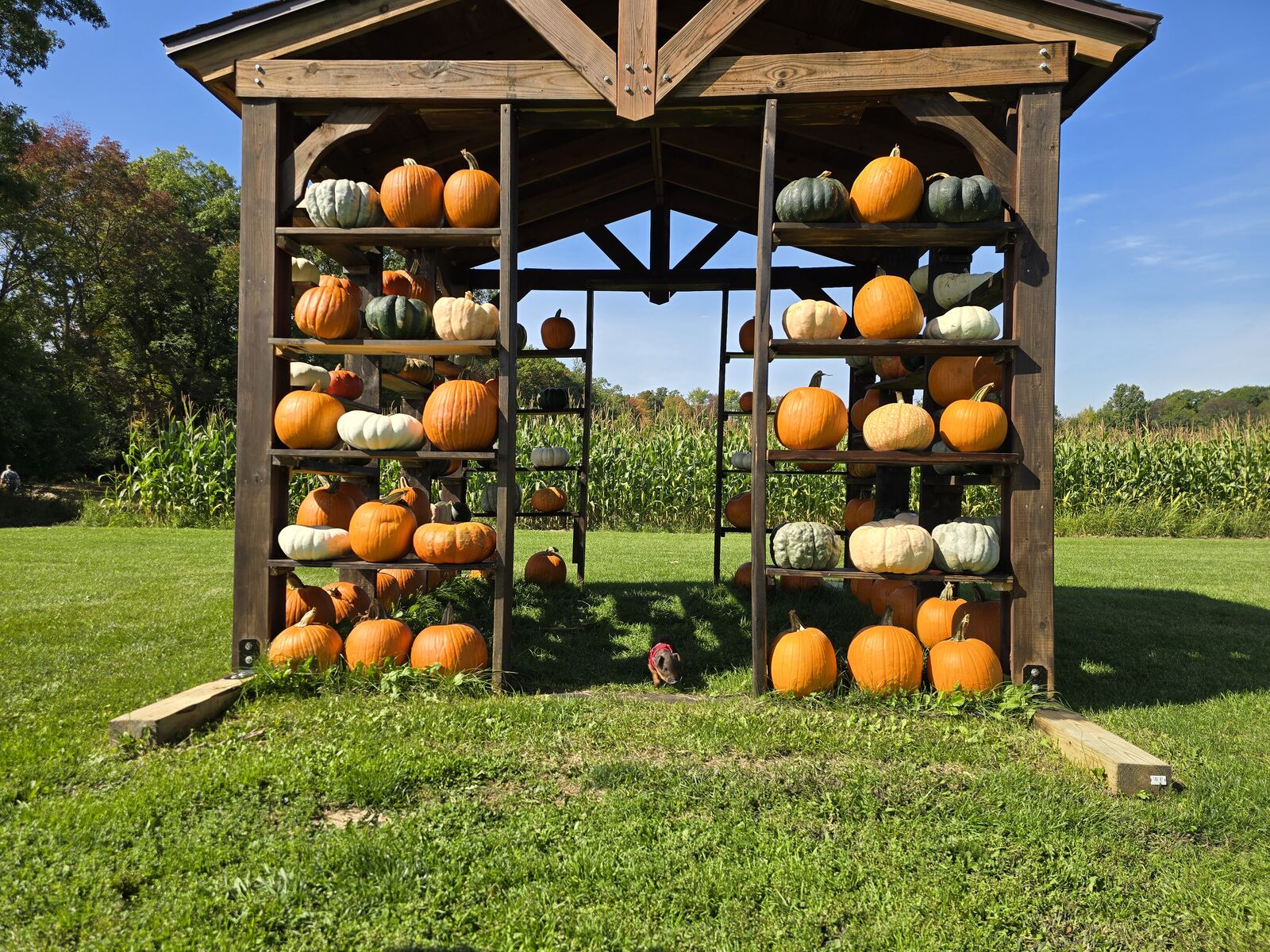
Estimate first, then measure: around the middle, height, weight, and rib count. Older kids compare price per pound between a small pumpkin and a large one, then run a profit problem with a hailstorm in it.
Apple Investigator
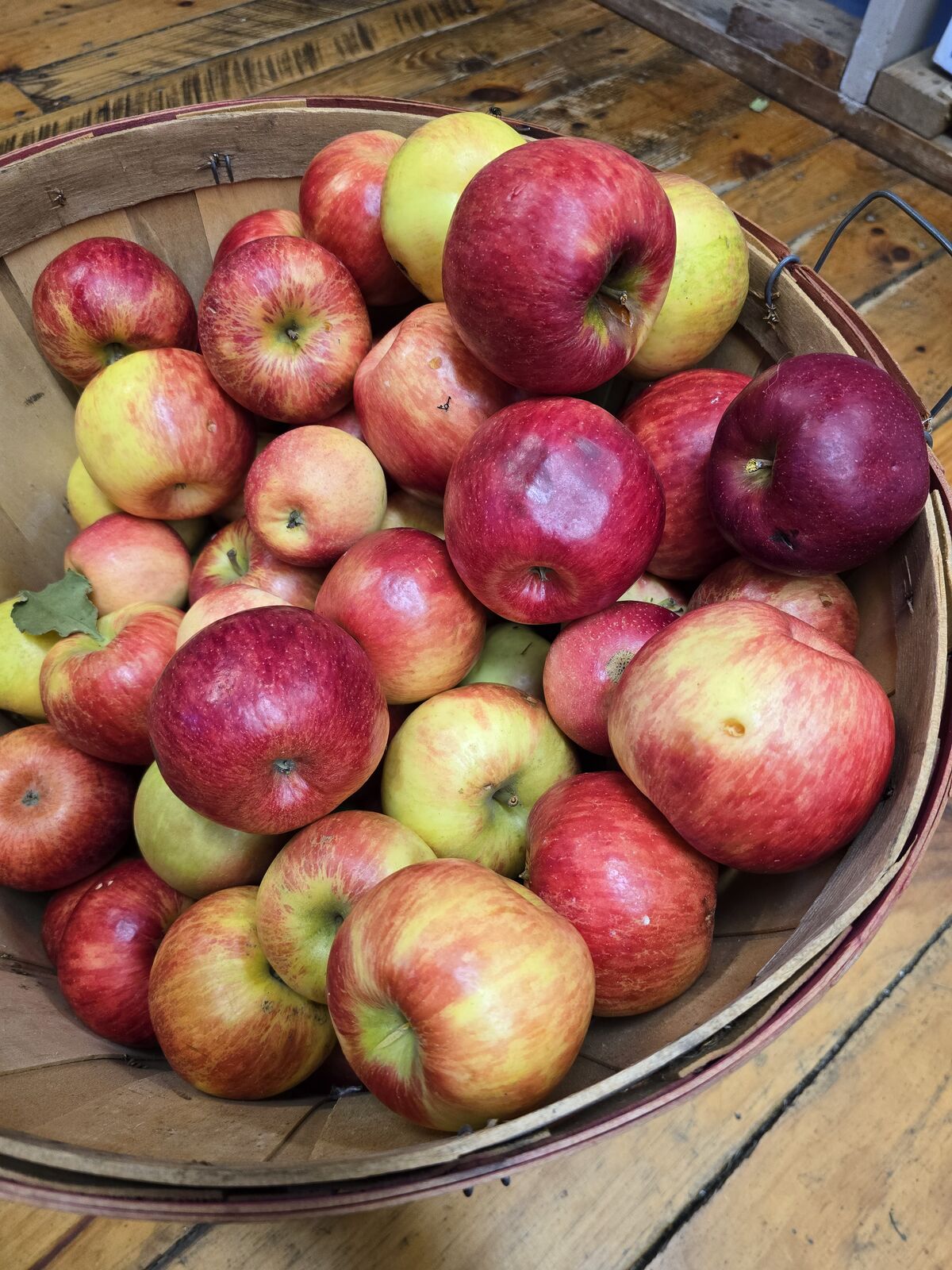
A tree that lives for decades next to a vine that dies at the first frost. Cut an apple across the middle to find the star, count the seeds, and run a blind taste test with the whole family rating sweetness and crunch.
Map Maker and Navigator
Youngest kid leads, oldest kid counts turns. At the exit, draw the farm from memory with a key and a compass rose. Then work out how many inches that corn grew per week since May.
Fall Nature Hunt
An eighteen-item checklist, a weather log, and a seed sort: gather five seeds and figure out whether each one travels by wind, animal, gravity, or people. Doubles as a race if you have competitive children.
Farm Business Detective
Count the jobs it takes to run 37 acres. Find five prices on signs and work out which one is the real money-maker. Then interview a staff member with one good open-ended question per kid — we like this one.
Story and Sketch
Sit down in the middle of the day, read a farm book out loud, and write. Little ones draw and finish a sentence; middles write a postcard; big kids write from an animal's point of view. Then sign the certificate.
Costs, hours, and the honest details
We're open daily September 1 through October 31, 10am to 6pm. Weekdays are quieter and cheaper, which is the whole advantage of homeschooling in October.
A sample three-hour day
Things worth knowing
- Wagon rides run weekends only. On a weekday the pumpkin display and farm store are a short walk from the barn.
- The kitchen window is weekends only. On weekdays the gift shop has grab-and-go snacks.
- No outside food or drink unless you've pre-arranged a group lunch in the pavilion.
- Handwashing stations are posted at the petting farm. Wash before you eat.
- Leashed dogs are welcome, with caution around the animals.
- No rain checks on admission, so pick a decent day.
- Restrooms on site. Cards accepted everywhere; no ATM.


Bring the whole co-op
Five or more kids can book a guided weekday tour at our group rate instead of coming self-guided. You get a farm guide for about 90 minutes, and the workbook still works alongside it.
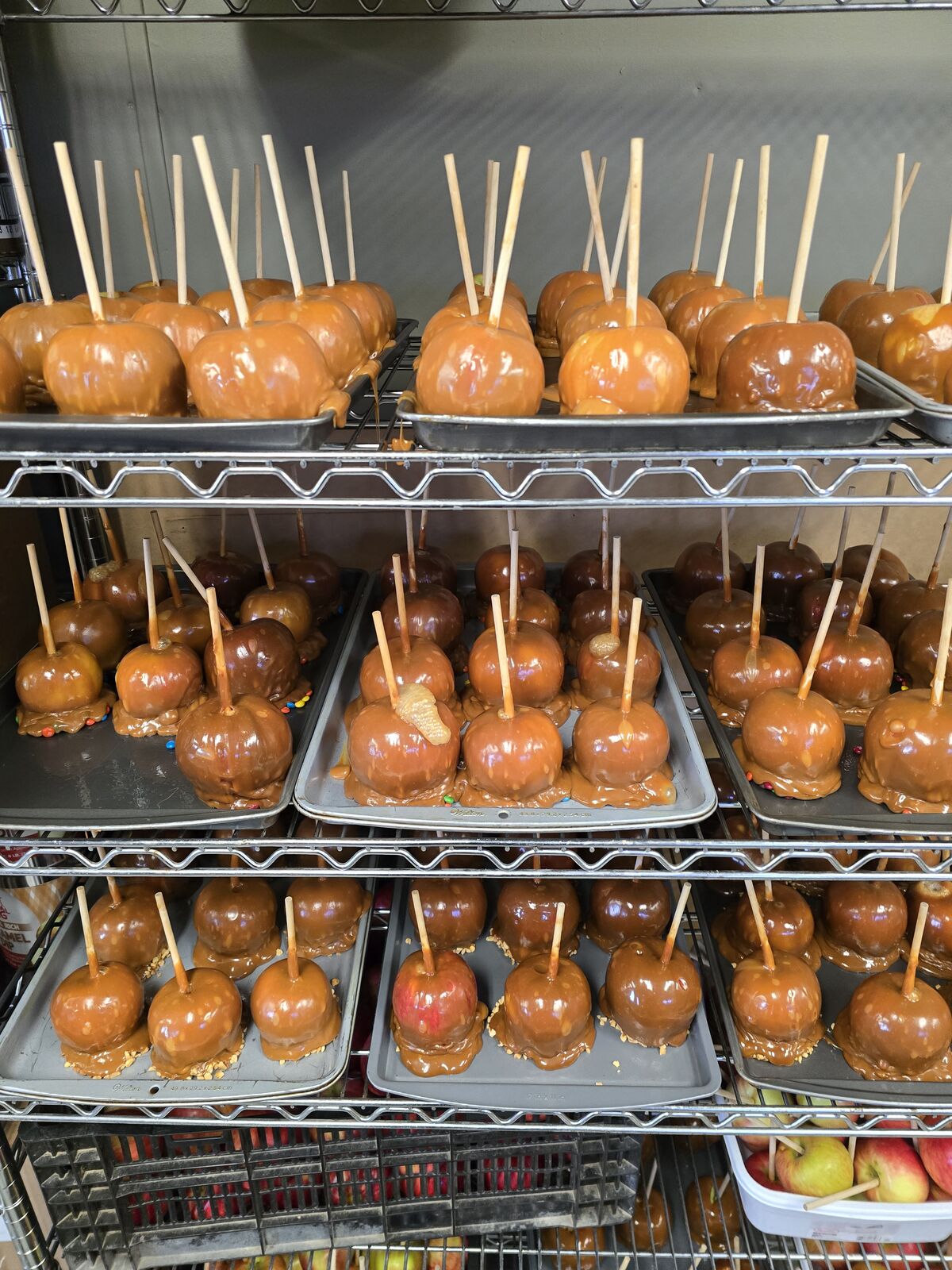
$10 per child including a small pumpkin and an apple to take home. $5 per adult. Teaching parents are free.
Book a group tour- Guided wagon ride, petting farm, corn maze, and play areas
- Story time at the end, while pumpkins and apples are handed out
- Groups of 5 to 100; larger groups split between guides
- One week's notice, please, so we can staff enough guides
- Bus or carpool parking on site; sack lunches can be pre-arranged in the pavilion
- Tell us your ages and what you're studying in the booking notes and we'll build the stops around it
Everything you need, nothing to buy
The workbook is the only thing you have to print. The rest are free lesson libraries we lean on ourselves.
Also in the workbook
Games
Two farm bingo cards, an eighteen-item scavenger hunt, a word search with fourteen hidden words, riddles and pumpkin trivia with an answer key, farm would-you-rather, and four car games for the ride home.
Take it home
Sink or float in the bathtub. Roasted pumpkin seeds. Why the apple turns brown, with lemon juice and salt water. Seed saving for spring. A pumpkin decomposition journal that runs eight weeks.
Printables
Farm rules to read in the car, a station stamp card, two nature journal pages, and a Farm School certificate signed by Farmer Jackie.
For your records
A one-page learning log per visit: which lessons you did, subjects covered, skills practiced, books read, and parent notes. Built to drop straight into a homeschool portfolio.
Teaching a classroom instead? The Teacher Hub has our K–5 field trip guide and lesson plans. Activity ideas here draw on the free library at National Agriculture in the Classroom.